
The United States’ 250th Birthday
Saturday marks 250 years since the Second Continental Congress voted to approve the Declaration of Independence.
We hear a lot these days about how bad things have gotten in the United States. Just a couple years ago 59% of Americans believed we were in a recession. In reality unemployment was 4.1% and annual GDP growth was around 3%. The media coined the term “vibecession” to describe this disconnect between perception and reality.
You can hand-wave much of it away as lingering anger at post-pandemic inflation. As politicians learned 50 years ago, Americans really hate price increases, even if they come with high real wage growth like we experienced in the 2020s.
But the rot extends well beyond nominal prices. According to a long-running Gallup survey question, barely 40% of people believe that today’s young people will have a better life than their parents.
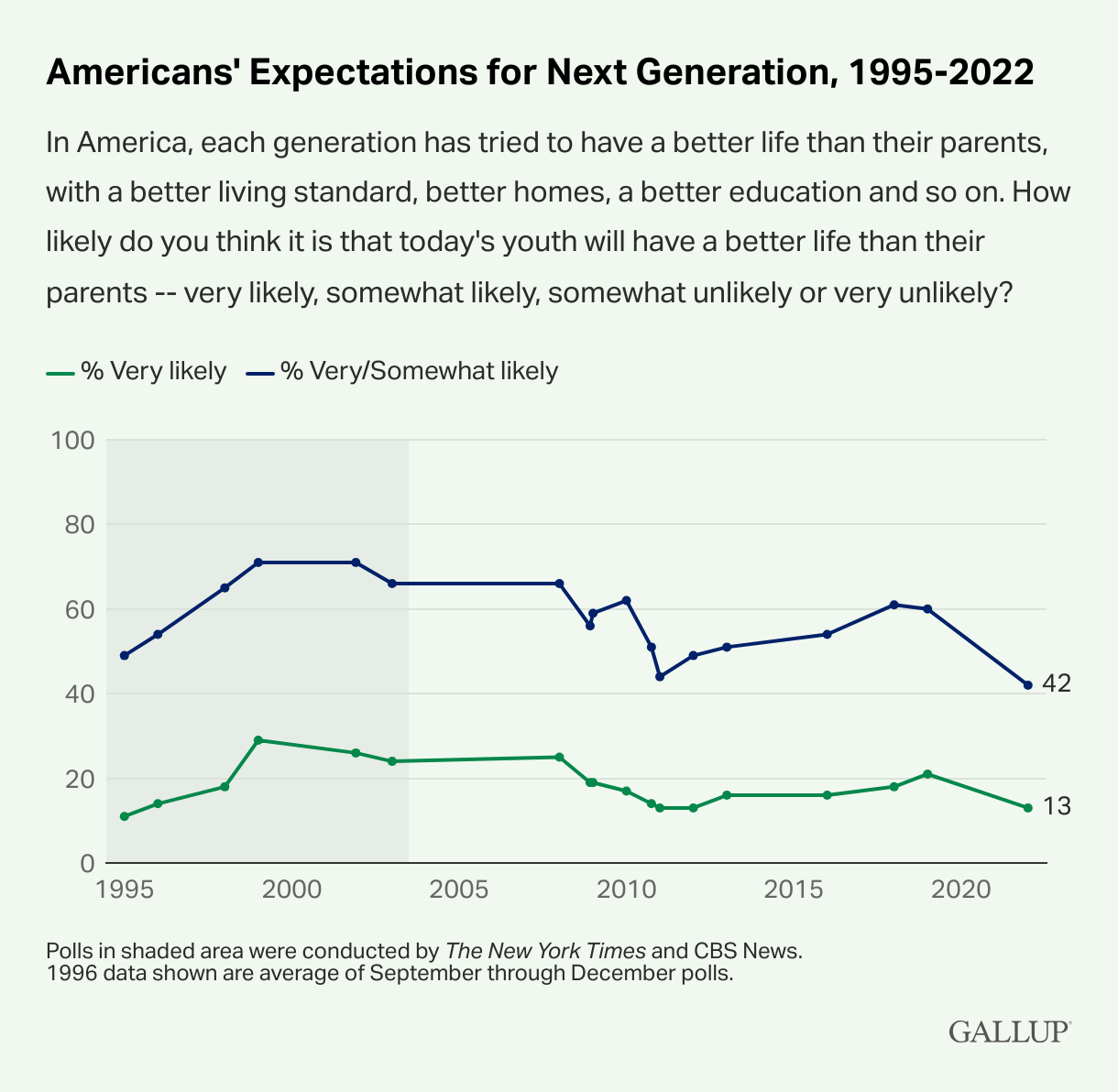
That’s asinine to me but it’s what people believe—or at least what they say they believe. Deciphering what exactly drives these downward expectations could be a post of its own (or more likely a book). You’d want to look at social media for starters. Or go broader to smartphones per se. In recent years maybe interest rates have played a role. The sudden departure of near-zero rates sent ripples across the whole economy.
In this post I’m more interested in presenting the opposing case. That is, everybody is wrong and America is actually awesome.
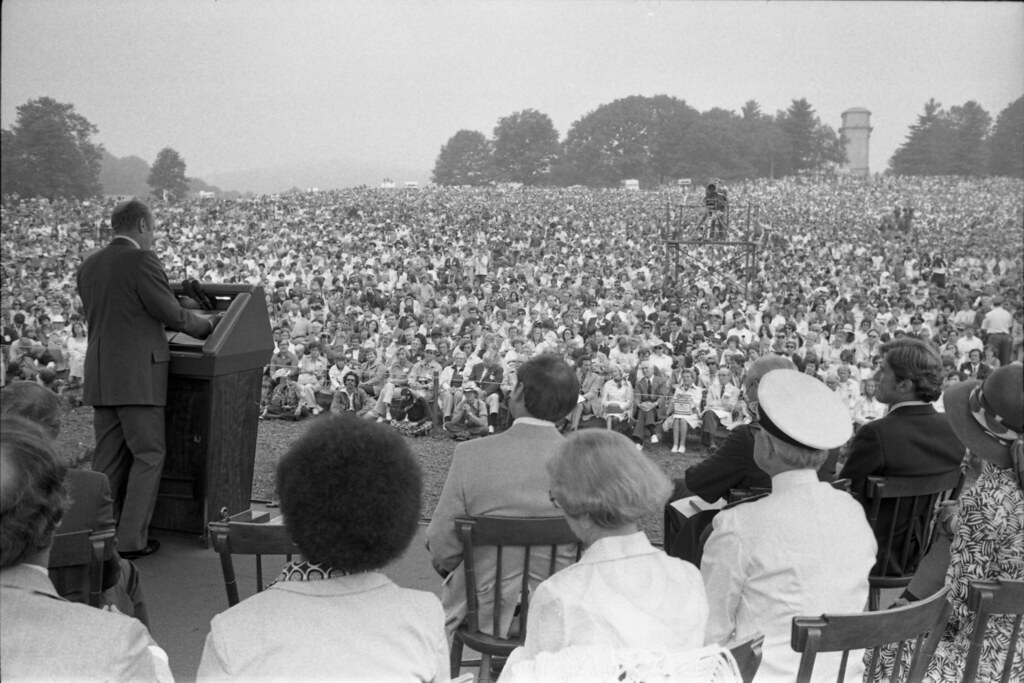
As we celebrate the Semiquincentennial it’s interesting how attitudes in our post-pandemic society rhyme with those of 50 years ago. Americans who celebrated the Bicentennial had Nixon and Vietnam in their rearview mirror much as we’re still moving on from COVID-19.
But despite widespread cynicism about the modern United States, reminiscent of those 1970s Stagflation-plagued doldrums, life has gotten so much better in the past 50 years.
It’s too easy to become blind to the slow march of progress. I assume fish stop noticing the water at some point as well. To combat this, here are ten good reasons you wouldn’t want to swap places with your grandparents in 1976.
1. Life expectancy has risen from 73 years to almost 79.
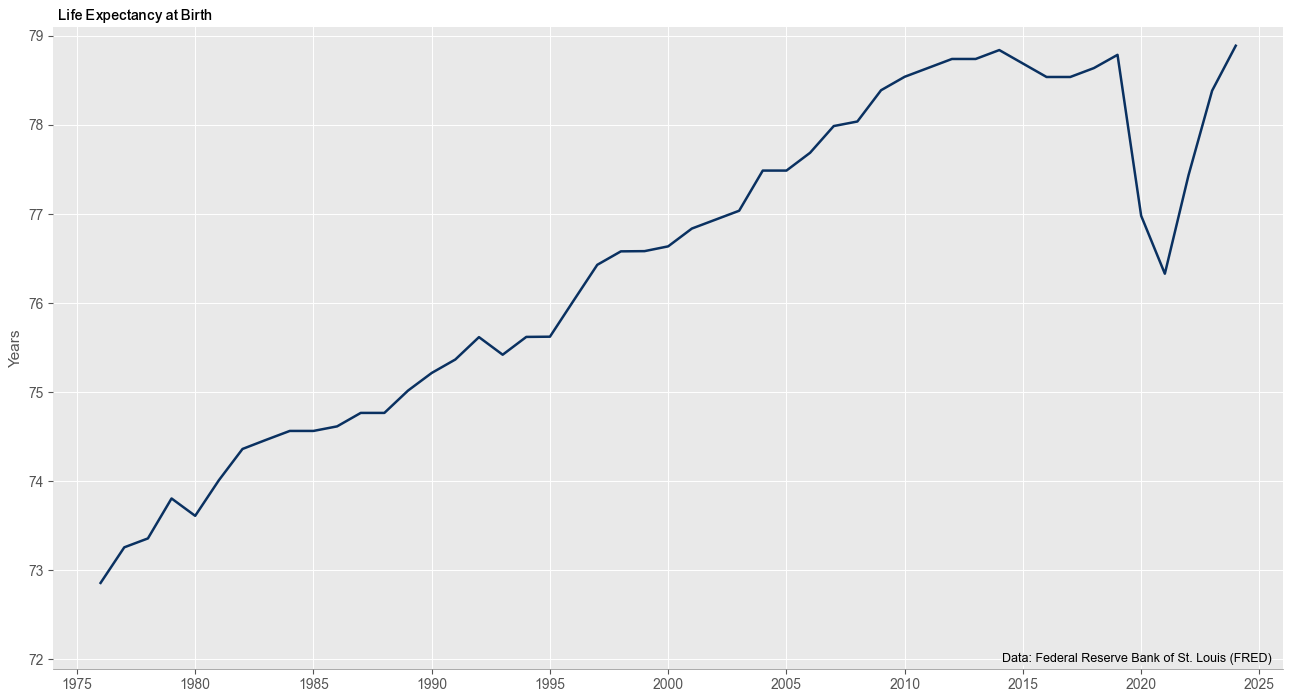
Source: FRED (SPDYNLE00INUSA)
2. GDP per capita, i.e. the total economic output per person in the country, has more than doubled.
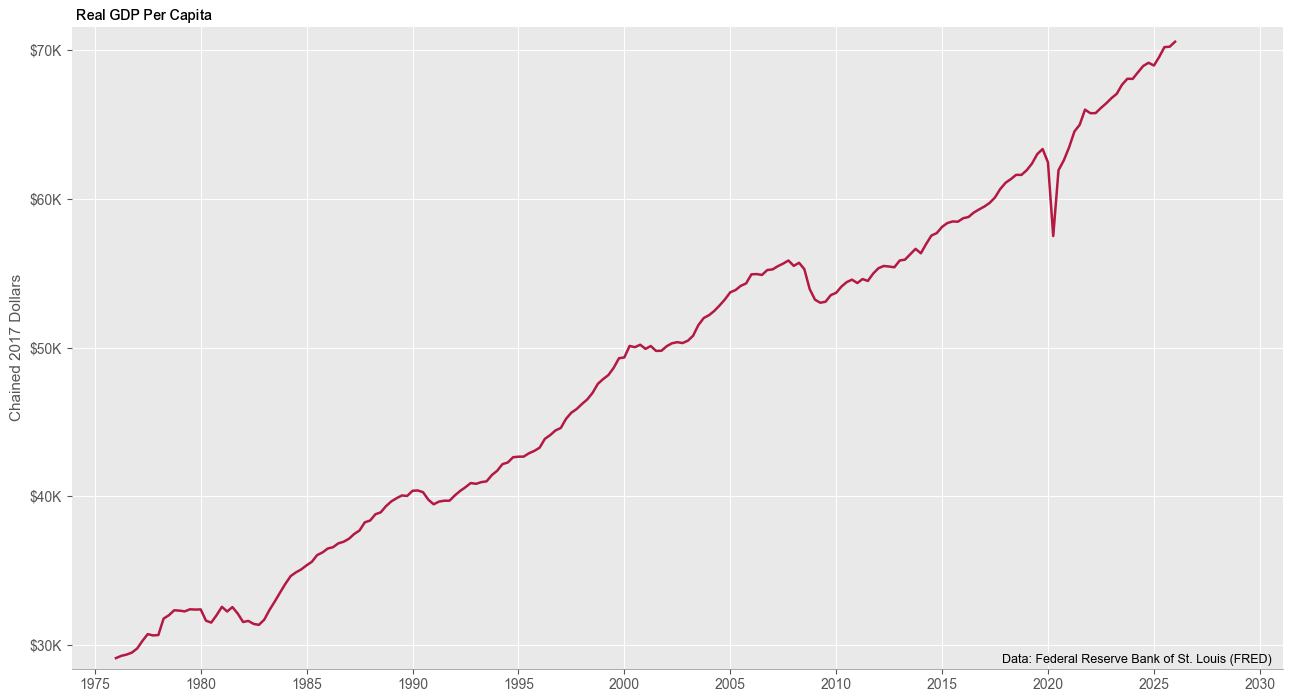
Source: FRED (A939RX0Q048SBEA)
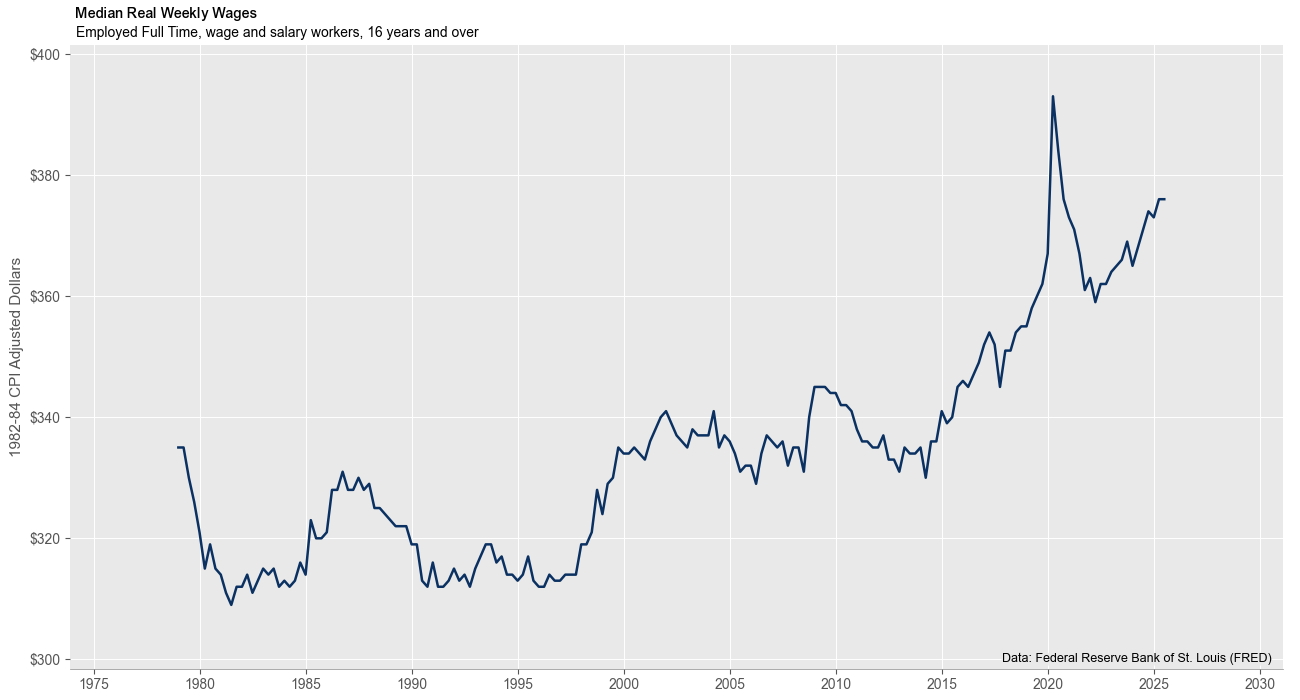
3. But wait, I know what you’re thinking and no, it isn’t just the rich getting richer. The median worker makes 15-20% more than they did in 1980, adjusted for inflation.
A decade ago when the populist pincer movement came on the scene, they actually had a good point about wage stagnation. But the situation has changed significantly since then.
Note that this series is reported in 1982-84 dollars. Today’s median American obviously makes more than $375 a week.
Source: FRED (LES1252881600Q)
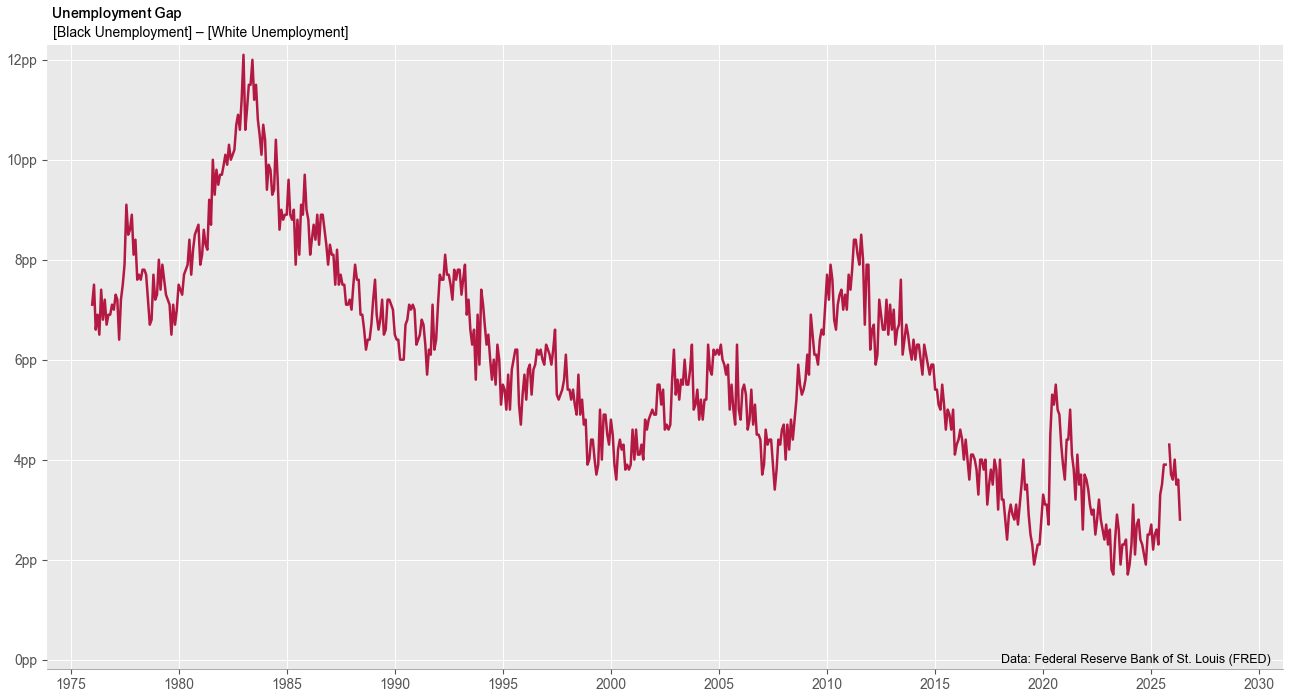
4. The gap between black and white unemployment has shrunk by more than half.
Sources: FRED (LNS14000006), FRED (LNS14000003)
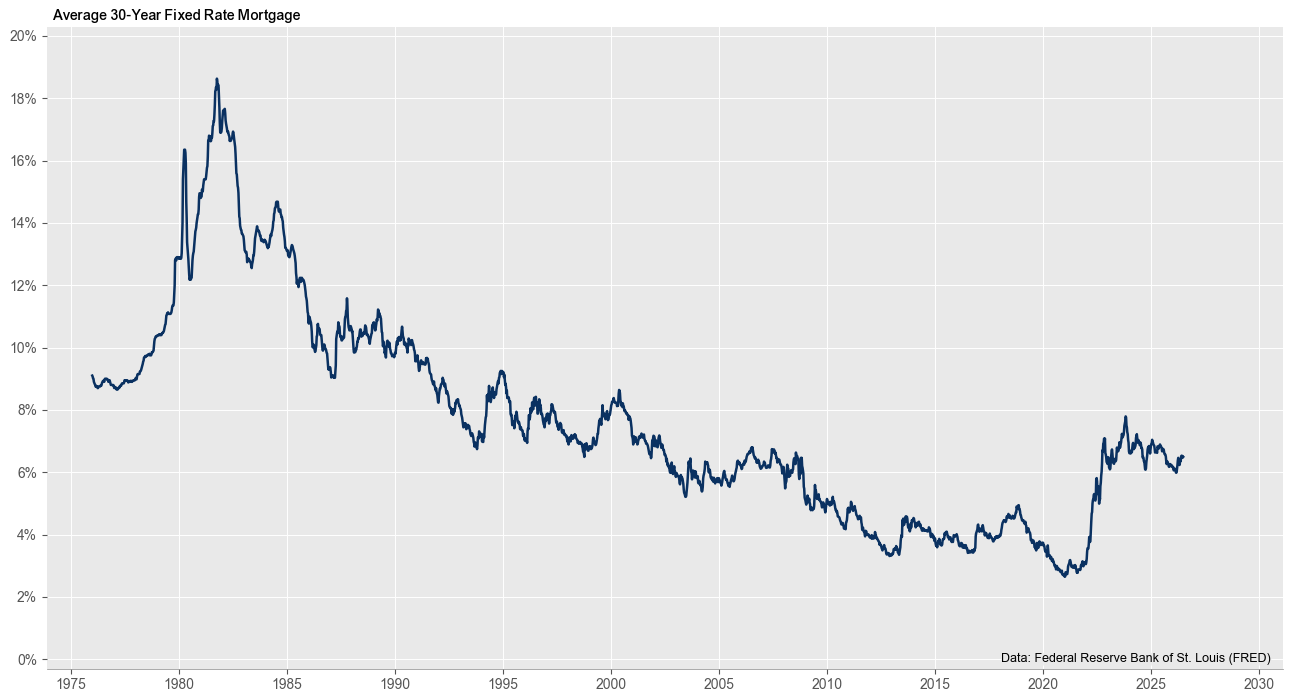
5. Typical mortgage rates are floating around 6.5%. While rates have risen in recent years and halted a 40-year trend that dated back to Paul Volcker, it’s still easier to finance large purchases than it was in 1976.
Source: FRED (MORTGAGE30US)
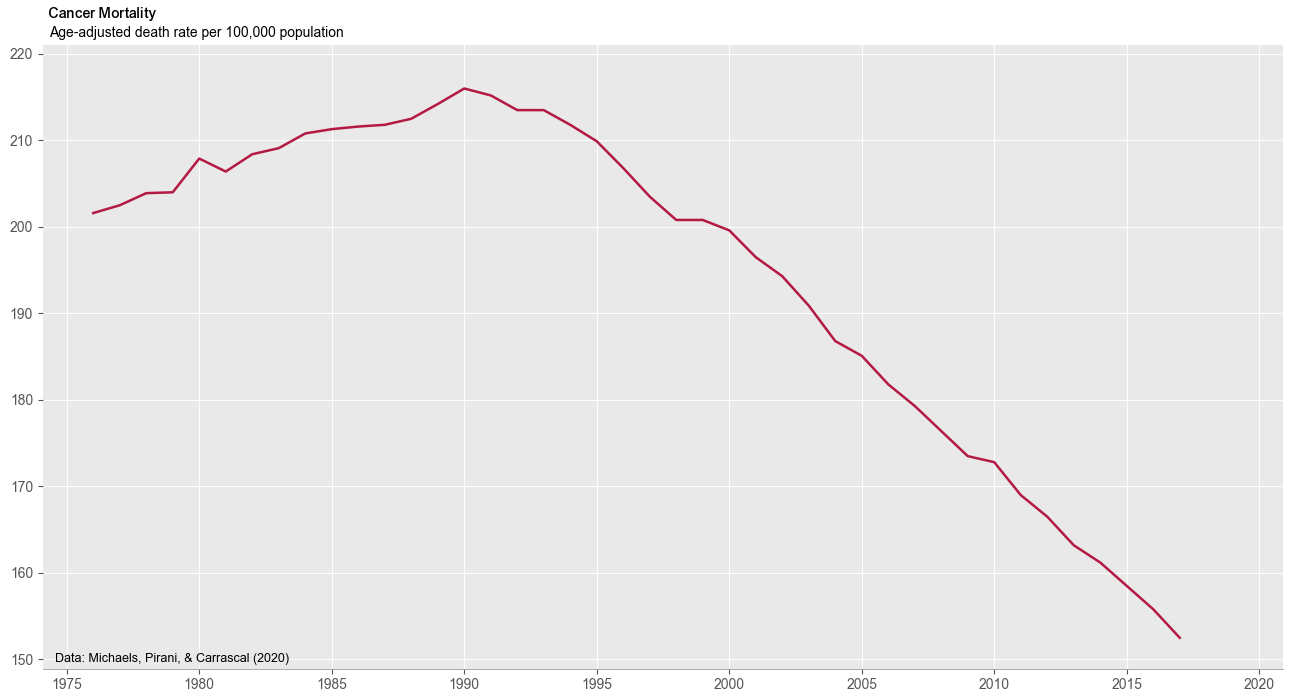
6. You and your loved ones are much less likely to die of cancer.
Source: https://pmc.ncbi.nlm.nih.gov/articles/PMC7207057/
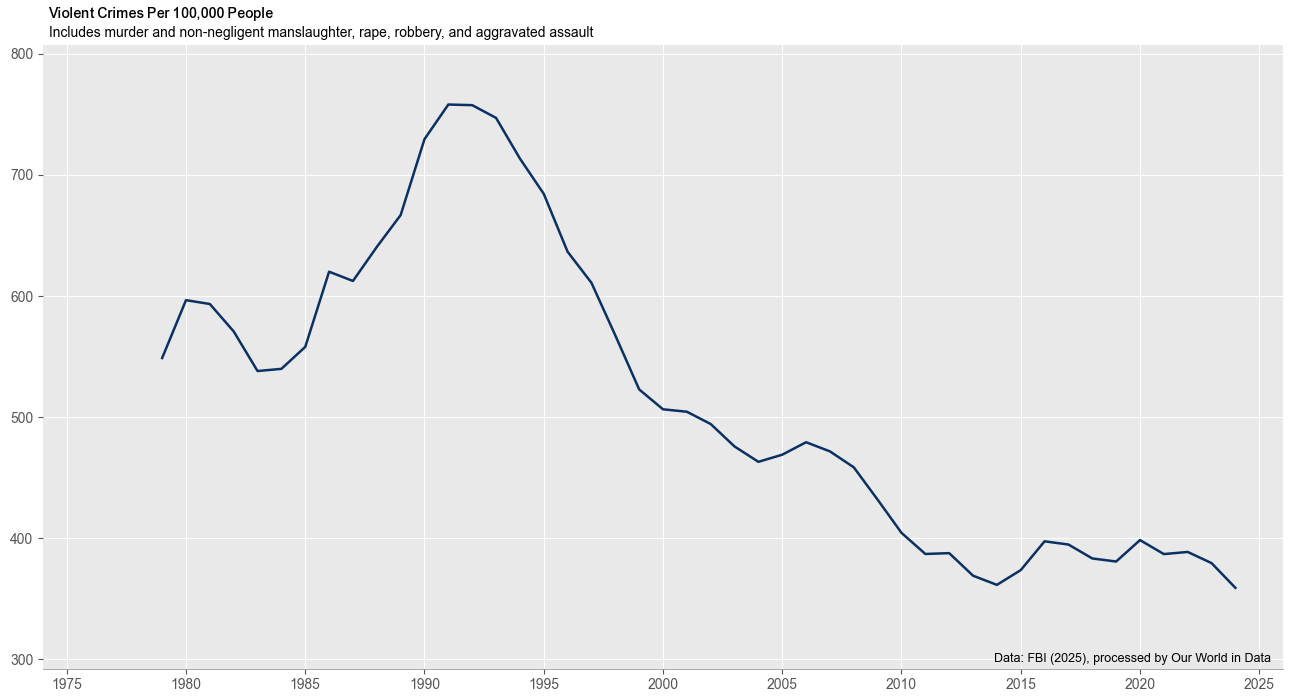
7. I did a whole post on this one a couple years ago. Despite popular misconceptions, violent crime keeps hitting new lows.
Source: FBI (2025) – processed by Our World in Data
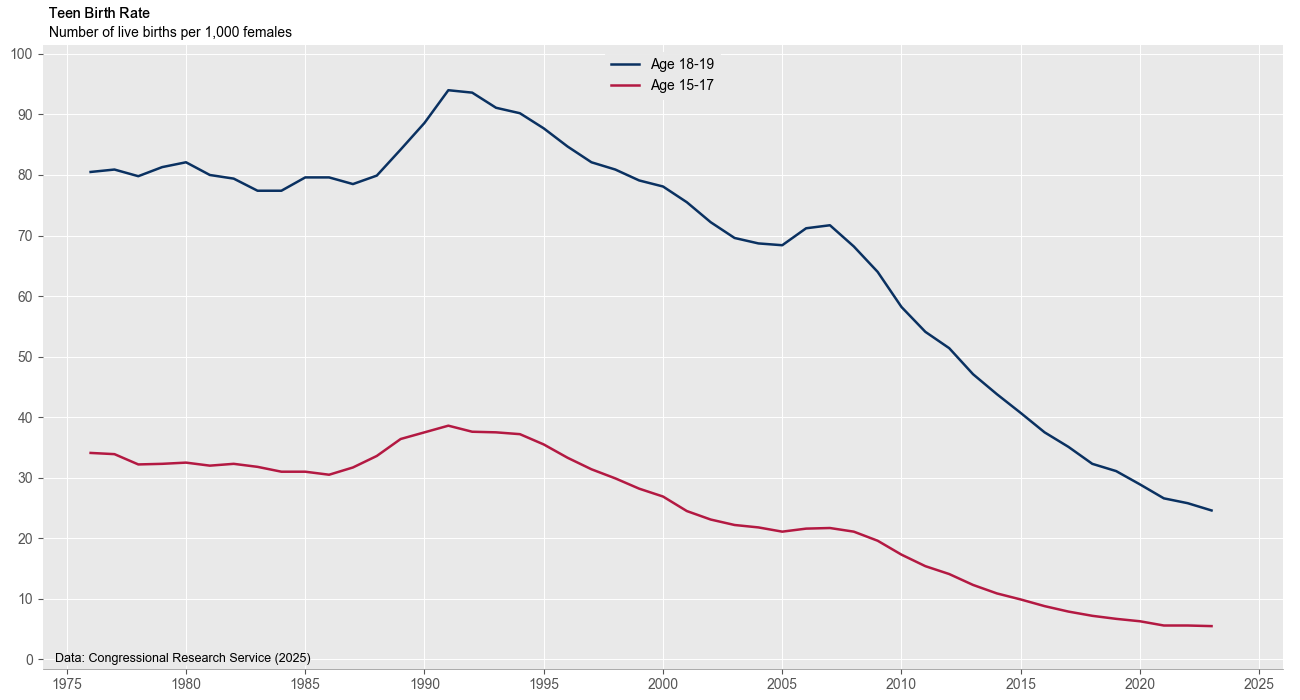
8. Teen pregnancies have fallen by 75% since 1976.
Source: Congressional Research Service
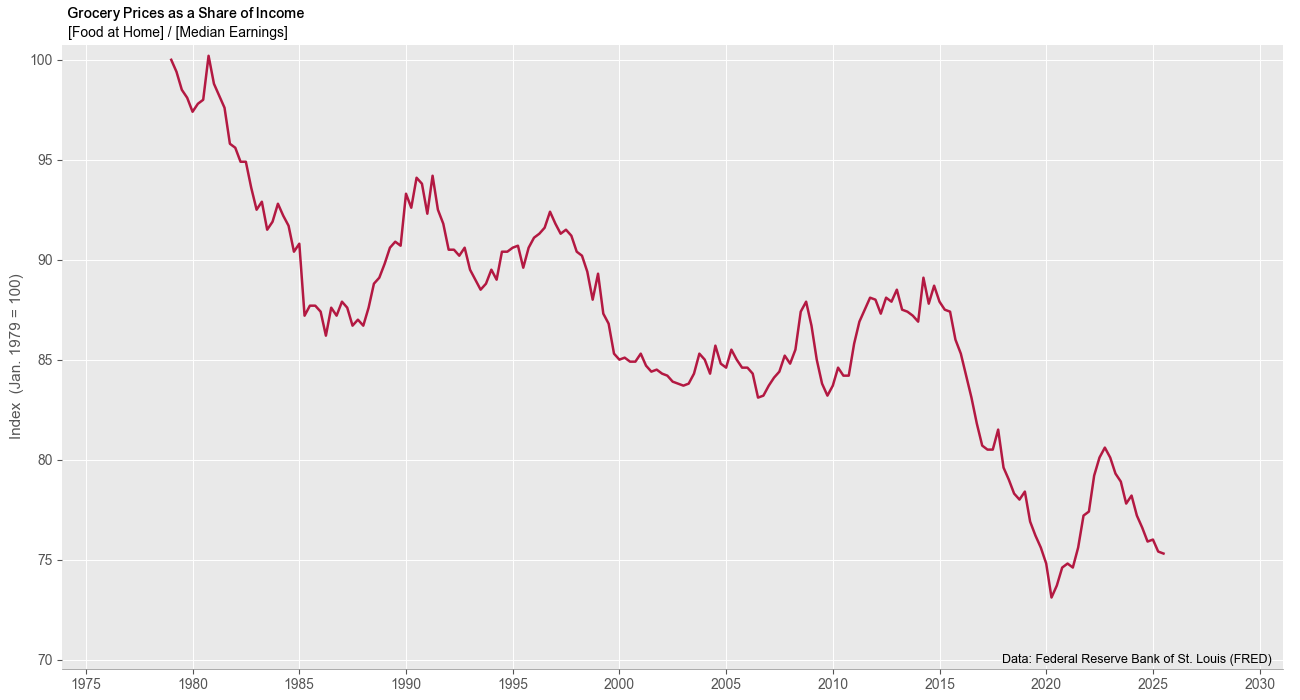
9. There is a stubborn bipartisan myth about price-gouging grocery stores. According to the data, food at home is nearly as affordable as ever—about 25% cheaper than 1976 relative to income. At the same time people are spending more on restaurants and delivery.
Sources: FRED (CUSR0000SAF11), FRED (LES1252881500Q)
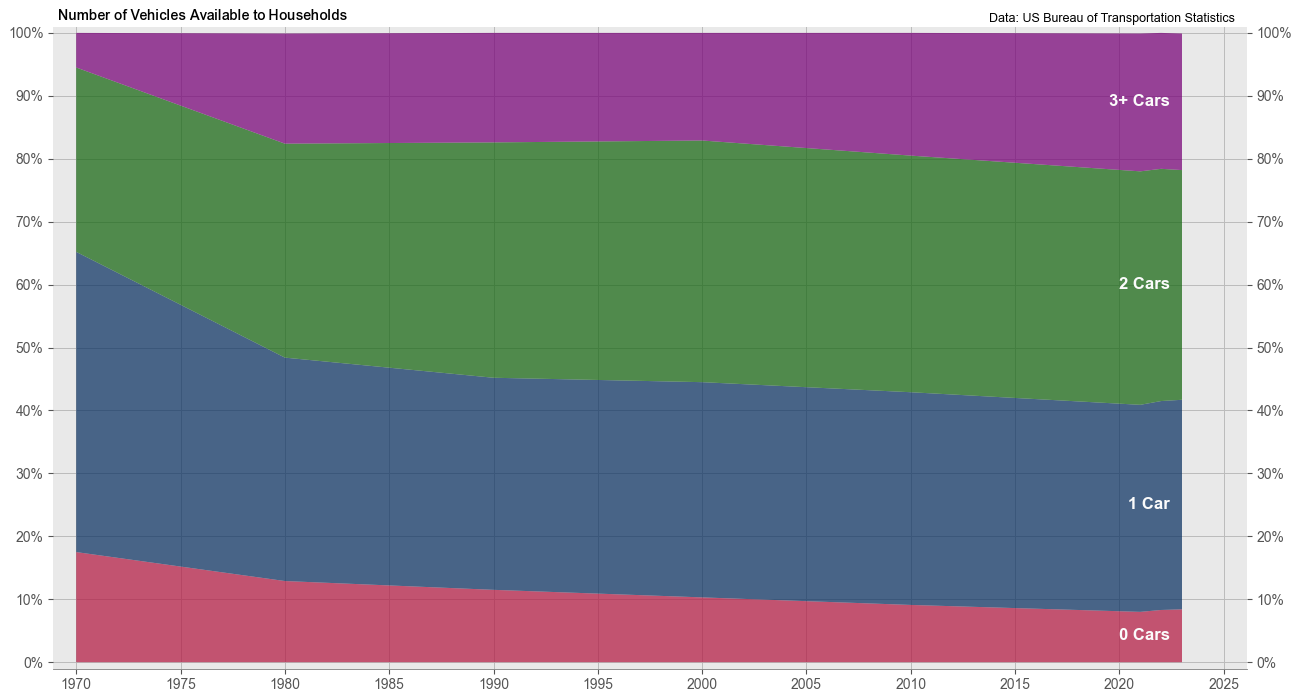
10. The share of households with multiple cars has grown from 45% to 58%. And the share without a car has fallen from 15% to 8%.
Source: US Bureau of Transportation Statistics
Not to mention your grandparents lived in smaller houses, took fewer vacations, ate at fewer restaurants, suffered with less air conditioning, received worse medical care, and a million other things.
Don’t believe reactionary nostalgia merchants when they claim we’ve been dealt a worse hand than previous generations. At best they’re misinterpreting economic data. At worst you’re a target of a foreign influence operation.
Instead, embrace your good fortune to live in (by far) the wealthiest, most technologically advanced country the world has ever known. Try to see the world like Freddy, the German World Cup visitor who recently went viral for his awe-struck descriptions of life in America.

Cynicism isn’t wisdom, as I hope this data illustrates. Think about why you feel an urge to “tear it all down” and what you’d be undoing. Yes, the United States still has problems. And we all have personal problems, large and small. But we Americans have vastly more opportunity than most humans who have ever lived. The most ordinary among us lives in luxury that kings of past centuries would envy—including George III.
Consider celebrating the Semiquincentennial by taking a break from social media.
Happy Birthday, America!